Friday - December 19, 2025
SCRIPTURE:
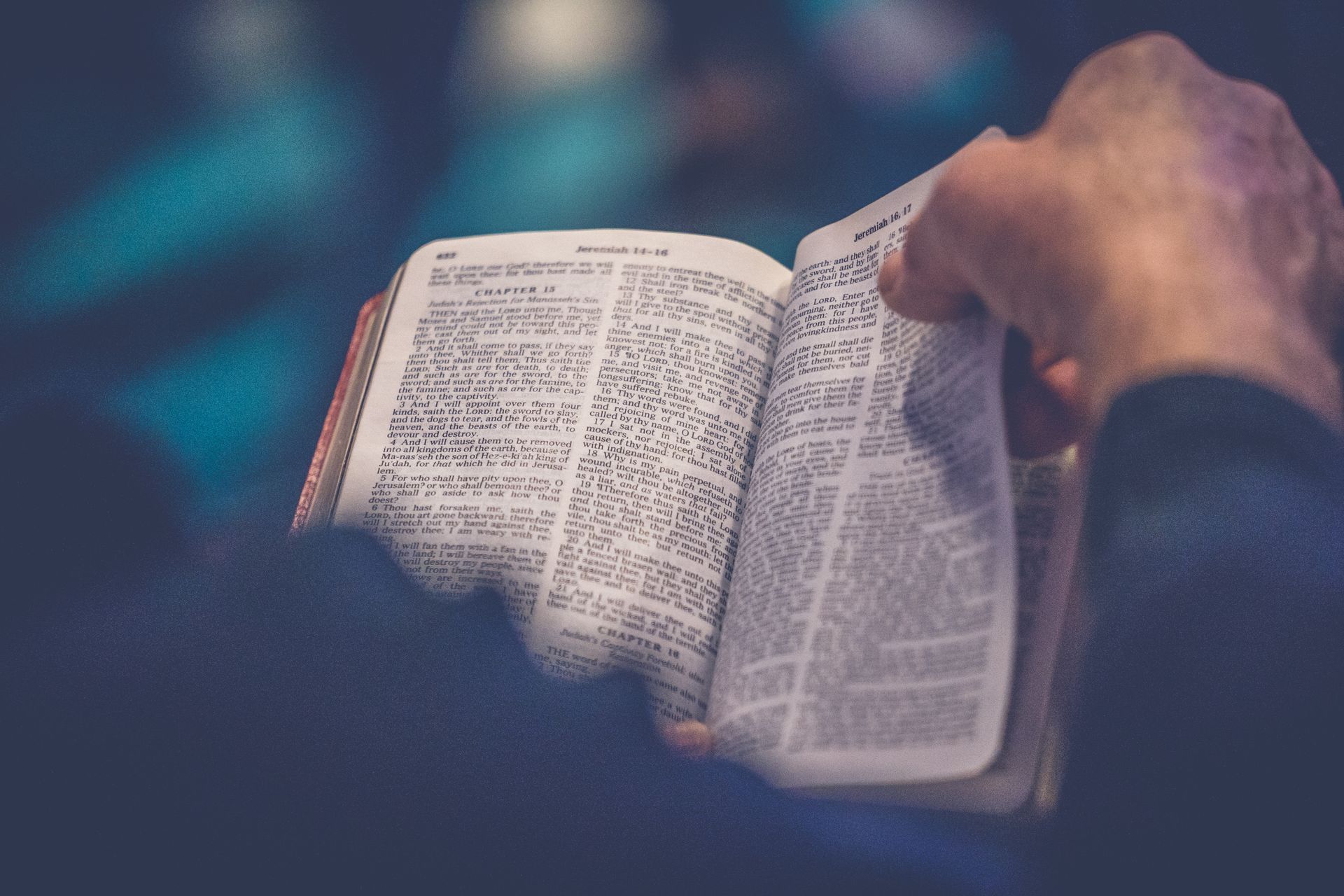
2 Samuel 7:18–22 (The Inclusive Bible)
“Then David went in and sat before YHWH and said: ‘Who am I, Sovereign YHWH, and what is my family that you have brought me this far? And even this was too small a thing in your eyes, Sovereign YHWH, for you have also spoken about the future of your servant’s house… How great you are—Sovereign YHWH! There is no one like you, and there is no God but you, as we have heard with our own ears.’”
WORDS OF HOPE
Today is Arabic Language Day, and something in my spirit stirs. I find myself thinking about theGod who refuses to be captured by one culture, one holy book, one tradition, or one familiar tongue. I think of David sitting before YHWH, stunned that the God of all creation would speak to someone like him. And I realize: God never stopped surprising us. God never stopped speaking in ways bigger than our expectations. Jesus spoke Aramaic, the cousin of Arabic—two languages shaped by the same desert winds, shared roots, shared rhythms. When Jesus preached, comforted, healed, and blessed people, he did so in a Semitic tongue full of poetry and ancient beauty. His voice would not have sounded like a Shakespearean monologue; it would have sounded like the language of fishermen, farmers, mothers, laborers, travelers, and the poor. A human language for a human God.
That truth comforts me deeply: God speaks in the languages of the people, not the languages of empire.
And God is still speaking—through Arabic, Hebrew, English, Navajo, Yoruba, Hindi, Mandarin,and the thousands of living languages carried in human breath. God speaks through texts like the Qur’an, the Bhagavad Gita, the Torah, the Gospels, Indigenous stories, Buddhist sutras, and the wisdom passed from grandmother to grandchild.
God speaks through all who bear the Divine image—queer voices, trans voices, immigrant voices, refugee voices, disabled voices, child voices, tired voices, joyful voices, and voices that tremble but speak anyway.
And then there is Arabic itself—a language I find breathtaking. Something about its script, theway the letters swirl like rivers and the vowels glide like silk, moves me. Its poetry feels ancientand alive. When I listen to Middle Eastern or Arabic music, it transports me. I feel like the veilbetween worlds thins, and suddenly I am standing somewhere holy—somewhere older, deeper,and wider than anything I can describe. And then there is the Adhan, the Islamic call to prayer. Driving to work in Plano, Texas, sometimes I get lucky. Sometimes, if the timing is just right, I hear the Adhan rising from the Plano masjid. I slow down—not just the car, but my soul. I watch people walking toward worship, shoulders relaxed, steps steady, their hearts set toward God. The masjid’s architecture glows softly in the morning light—curved, calm, dignified, beautiful.
I am not Muslim. And yet I love hearing the Adhan.
It reminds me that somewhere, right now, someone is stopping everything to pray.
To breathe. To remember who they are and who God is.
It grieves me that Western culture has trained so many to fear what is unfamiliar—labeling
Arabic, Islam, and Muslim communities as “dangerous” or “evil.” That lie feeds xenophobia andIslamophobia. It harms real people. It blinds us to beauty.
Because when I hear the Adhan, I don’t hear danger. I hear mercy. I hear peace.
I hear a reminder that Christians desperately need our own call to prayer—a call that interrupts noise, ego, and fear, and summons us back to God.
And as a Christian and an LGBTQIA+ ally, I know I am called to be a bridge. Not a perfect one. Not a heroic one. But a faithful one. A bridge between Christians and Muslims.
A bridge between queer people and churches that have yet to fully love them. A bridge between those who fear difference and those who embody it. A bridge between God and God’s beloved children. Being a bridge means listening when others dismiss.
Honoring what others fear. Standing with Muslim neighbors, queer neighbors, trans neighbors, immigrant neighbors, and anyone whose truth is misunderstood or despised.
Because the God who speaks through Arabic also speaks through:
• Hindu mantras naming Ishvara, the indwelling Divine
• Buddhist chants calling on Amitabha, the boundless compassion
• Sikh prayers proclaiming Ik Onkar — God is One
• Indigenous songs honoring Creator and Great Spirit
• Church bells echoing across city streets
• Queer and trans voices claiming holy dignity
• Protest chants crying out for justice and liberation
• Refugee stories filled with courage and heartbreak
Oceans breathing, forests singing, mountains humming their silent praise
God is still speaking—through languages we understand, languages we fear, and languages we have yet to hear. God speaks through every culture, every people, every prayer, every cry for justice, every breath of hope. Arabic Language Day reminds me that God’s voice is far more expansive, more colorful, more multilingual, and more surprising than anything our narrow worldviews can contain. God invites us into a Kin-dom where every language, every identity, every faith, every person belongs.
SHORT PRAYER
God of all Names— YHWH, Allah, Adonai, Elohim, El Shaddai, Ishvara, Dharmakaya, Great Spirit—Open my ears to hear You everywhere. Teach me to honor Arabic and the beauty it carries. Teach me to hear Your call in the Adhan, in bells, in chants, and in silence. Make me a bridge of compassion, justice, and understanding—especially for Muslim, queer, trans, and immigrant neighbors. Calm my assumptions, soften my fears, expand my love. Lead me into Your Kin-dom of radical welcome, courageous faith, and holy diversity. Amen.
DEVOTION AUTHOR
Reed Kirkman
Need Some Inspiration? Read our Daily Devotions