Wednesday - April 12, 2023

Donald (Luke) Day

SCRIPTURE


Luke 23. 41-43


“We are punished justly, for we are getting what our deeds deserve. But this man has done nothing wrong.” Then, he said, “Jesus, remember me when you come into your kingdom.” Jesus answered him, “Truly I tell you, today you will be with me in paradise.”


WORDS OF HOPE


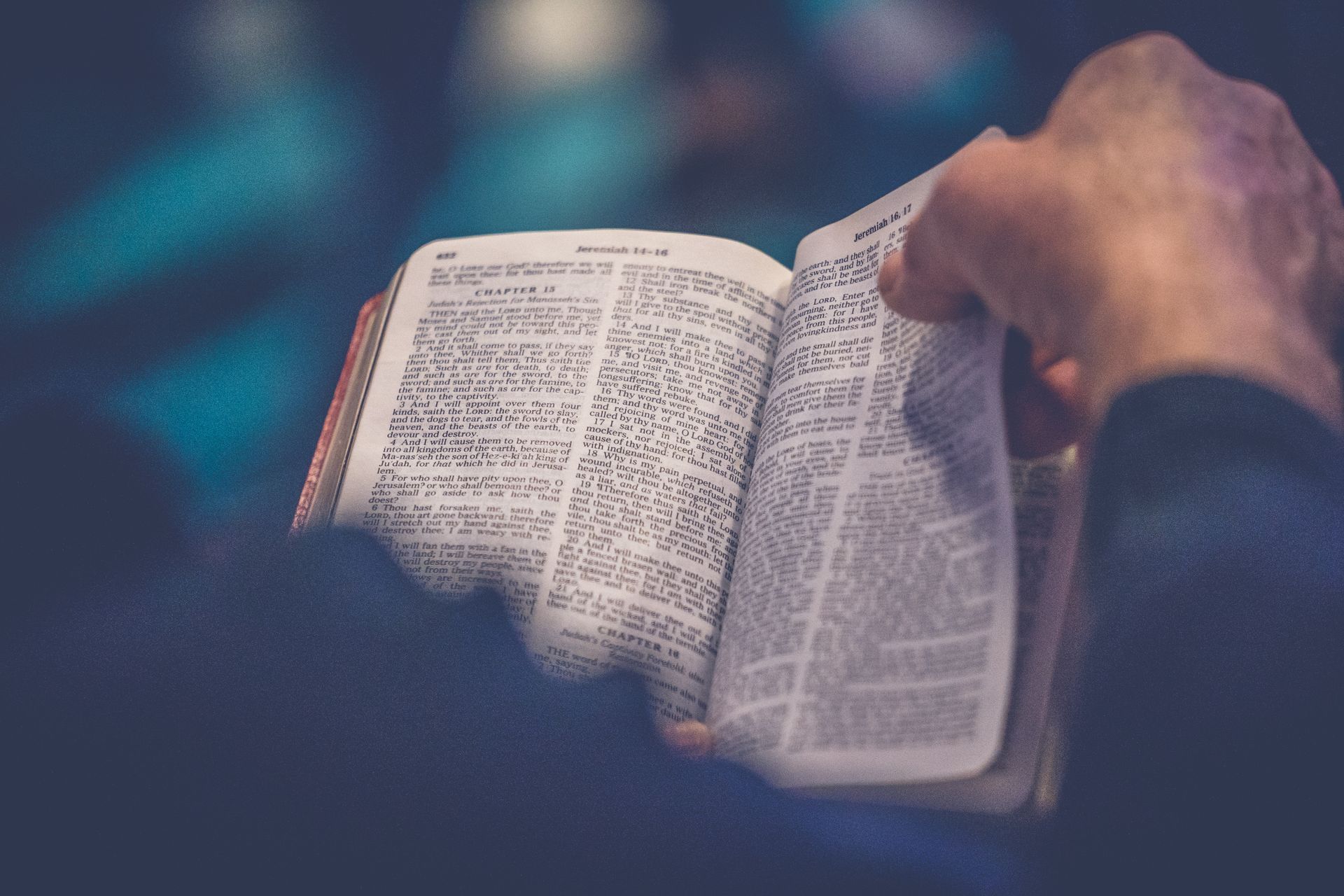
Though Easter Sunday is behind us, the reflective Season of Eastertide is just beginning. There is still time to meditate on the passion of the Christ and the significance of His sacrifice in our own lives. Today’s reading comes from Luke’s narrative of the short conversation between Jesus and one of the thieves on the cross.


Jesus had been crucified with two thieves hung on crosses beside him. The holy Jesus had suffered the exhaustion of his betrayal, trial, torture and now the pain of being nailed to the cross. Death of his body was close at hand. And yet, he must endure ridicule from one of those thieves and many individuals who traveled by the site of the crucifixion. It seemed almost too much to deal with. Almost a time to curse and spit if there had been only enough energy left in his body. Maybe it's a time to sink within one's own body and shut out all the noise and evil action around.


However, one of those thieves recognized Jesus' holy nature and pleaded that Jesus would remember his confession: "I have been condemned justly but this man (Jesus) has done nothing wrong. Jesus, remember me when you come into your kingdom." Jesus could have been consumed with his own agony, but instead, he responded to that thief: "Truly, I tell you, today you will be with me in paradise." There's a real lesson for us in these few verses. In times of deep pain and loss in our life, there usually are others around us who also are in agony and may not have an adequate relationship with God. They may not have the assurance of that divine loving presence which can lead them through the current trial. In such difficult and self-consuming moments, we are still servants of Christ, and still asked to witness to God's loving and forgiving care. It is during such moments, that our words and actions have their greatest strength to tell of divine grace. It is then that we can extend to others God's offer of peace to a weary humanity.


As followers and proclaimers of the blessed love of God, never do we have the right to "crawl into our own shell of comfort" and ignore the pain of those around us! May we take the example of Jesus' promise given to this dying thief. We can do no less than Jesus!


PRAYER


Gracious God, as I reflect on the example of Jesus' experience, strengthen me to be more faithful and consistent in my life's witness to your redeeming love. Open my eyes to the opportunities in which I can help others find you as a rich source of comfort and guidance for their life. Amen.


DEVOTION AUTHOR


Donald (Luke) Day

Order of St. Francis and St. Clare


May this week be filled with God given opportunities for you to express God's love.


Need More Inspiration? Read our Daily Devotions
By Donald (Luke) Day December 24, 2025
SCRIPTURE Genesis 21. 1-7 Now the LORD was gracious to Sarah and had said and did for Sarah what had been promised. Sarah became pregnant and bore a son to Abraham in his old age, at the very time God had promised him. Abraham gave the name Isaac to the son Sarah bore him. When his son Isaac was eight days old, Abraham circumcised him, as God commanded him. Abraham was a hundred years old when his son Isaac was born to him. Sarah said, “God has brought me laughter, and everyone who hears about this will laugh with me.” And she added, “Who would have said to Abraham that Sarah would nurse children? Yet I have borne him a son in his old age.” WORDS OF HOPE On this Christmas Eve, as we anticipate the birth of Christ into the world, today’s scripture reading reminds us of another miracle birth to the two people who were the founders of our faith. Sarah and Abraham had been promised a child for many years and in fact Sarah was about 90 years old when the birth of Isaac finally occurred. Isaac’s name means “Child of Laughter” and Sarah hoped that everyone who ever knew of the story of his birth would share the same kind of joy that she had experienced. These would certainly have been Mary’s wishes as she gazed on that baby in the manger. That manger in which the newborn Jesus lay no longer exists. Long ago, it fell into uncertainty or the weather of time. But spiritually at each Christmas season, it continues to draw us into its presence and offer weary humanity it's redeeming hope. The poet and writer Marty Haugen put it this way: "Holy Child within the manger, long ago yet ever near; Come as Redeemer to every stranger, calm our hope for every fear. Once again, we tell the story how your love was shown. Holy Child within the manger, lead us ever in your way, so that we see in every stranger how you come to us today. In our lives and in our living give us strength to live as you did, so that our hearts may be forgiving and our spirits strong and true." Now in this Christmas season, that welcoming stable manger is found everywhere hearts and lives are open to God's divine embrace. PRAYER I pray that each of us will be richly blessed by the kiss of the Christmas message, and may it invigorate our Christian witness to the world. As we meet others, may we be that shining light first shown to us by the Christ child. Amen DEVOTION AUTHOR Donald (Luke) Day Order of St. Francis and St. Clare
By Kris Baker December 23, 2025
SCRIPTURE  “My soul magnifies the Lord, and my spirit rejoices in God my Savior, for he has looked on the humble estate of his servant. For behold, from now on all generations will call me blessed; for he who is mighty has done great things for me, and holy is his name. And his mercy is for those who fear him from generation to generation. He has shown strength with his arm; he has scattered the proud in the thoughts of their hearts; he has brought down the mighty from their thrones and exalted those of humble estate; he has filled the hungry with good things, and the rich he has sent away empty. He has helped his servant Israel, in remembrance of his mercy, as he spoke to our fathers, to Abraham and to his offspring forever.” WORDS OF HOPE During this time of year when we are surrounded by images of elves and reindeer and snowmen and Santa Claus, and, yes, Jesus too (though he hasn’t been born yet), the most important “character” of this Advent season is often overlooked. In fact, this entire time of year for many is just a big blur of red and green amidst a mad rush to Christmas morning. If we want to properly celebrate Christmas, we must first fully participate in this season of Advent, a season of prayer and reflection, of waiting, of recognizing and honoring both the faith and example shown to us in Mary. One of my favorite parts of worshipping in the Anglican tradition is that this passage from Luke, known as the Magnificat or The Song of Mary, is a regular part of the Daily Office of Evening Prayer; it is the canticle said or sung after the first reading every single day. Though I see these words almost daily, they seem to stir my soul more deeply during this Season of Advent. Because the Magnificat is an integral part of the service of Evening Prayer, it has been set to music by many composers, further “magnifying” Mary’s words, words that she spoke to her cousin Elizabeth after the Angel Gabriel announced to Mary that she was the bearer of The Messiah. (If you are looking for some music to help you pray your way through these last few days of Advent, do an internet search for settings of the Magnificat.) “My soul magnifies the Lord, and my spirit rejoices in God my Savior.” If only we could all speak these words with the honesty and commitment with which Mary does. Amidst the fear and uncertainty that came from being told that she, a virgin, was pregnant, Mary was able to sing these words from a place deep in her soul, the manifestation of her profound faith, a faith marked by humility, absolute trust, and awe. She proclaims this faith in the words, “he has looked on the humble estate of his servant. For behold, from now on all generations will call me blessed; for he who is mighty has done great things for me, and holy is his name. And his mercy is for those who fear him from generation to generation.” Mary continues on with words that could be seen as a foreshadowing of The Beatitudes. She proclaims that the proud have been scattered by their thoughts, the mighty have been brought down and the humble exalted, the hungry have been filled and the rich sent away empty. Mary declares these things as one who has seen them firsthand and knows them to be true. She was not only talking to Elizabeth back in the first century; she was also speaking to us. We are one of all those generations to come that “will call me blessed.” As this season of Advent comes to a close and we prepare for Christmas, let us maintain a place in our hearts for Mary. May we welcome the Christ-child not only amidst wrapping paper, lights, and reindeer hoofs, but with the same awe, wonder, and responsibility to care for him as did Mary and Joseph on that night in Bethlehem. A PRAYER Hail Mary, full of grace, the Lord is with you, untroubled maiden. You are blessed among women, you who brought forth peace to people and glory to the angels. Blessed too is the fruit of your womb, who by grace made it possible for us to be his heirs. (An adaptation by Matthew Fox of the traditional “Hail Mary.” DEVOTION AUTHOR Kris Baker Order of Saint Francis and St. Clare
By Charlie C. Rose December 22, 2025
SCRIPTURE  Isaiah 33. 17-18 Your eyes will see the king in his beauty and view a land that stretches afar. In your thoughts you will ponder the former terror. WORDS OF HOPE Isaiah’s Prophesy today is an excellent introduction to Christmas week and points to the entry of the coming Messiah. But what about the here and now? At any time in your life, have you asked “Why am I here?” “What’s my purpose?” Or maybe “I’m alive, now what?” I think about these questions constantly. As I look around my house, and anticipate the addition of even more gift items, it’s obvious I have accumulated lots of things, usually souvenirs centered around a happy memory or experience. Lots of keepsakes that have become props to jog my memory for friendship, perhaps vacations, or memories I’ve become too attached to. I have asked myself: do these things serve any purpose? Those are all about yesterday. They don’t offer me any meaningful clue about why I am here today. Why do I keep things? I know there are lots of people who don’t particularly like having stuff; those minimalist folks find happiness in other ways. I appreciate their philosophy. Maybe when I look at my mementos of good times past, I consider the times that relieved me of stress, anxiety, or sadness and I wonder if I lose “the things” will I forget my happy experiences? Our yesterdays can serve our todays and today, as usual, I’m considering my deeper role, my purpose. If I were placed here on Earth to serve anything outside of myself, am I doing this right? It’s hard to say. Living a life less planned and more spontaneous has served me well but has it served others? I’ have looked at an old keepsake now and then, an old Christmas gift, perhaps with a little silent prayer of thanks in mind and related an optimistic story about it to a friend. I’m often rewarded with a smile on that friend’s face. We live in a time when too many of us wear despair on our faces. A sense of optimism should be high on the “purpose of life list” each of us should carry. A smile is a powerful gift these days. It’s a worthy purpose. I’ve learned that happy stories about old gifts actually can serve an important use, sort of like props with a purpose. Maybe, at least, I’ve discovered one of the reasons I was put here. If that makes you think I know something special, I don’t. And now we’re full circle. I have rediscovered I have no solid answers. I do know, however, that my eyes have seen Isaiah’s “king in his beauty” arrive for quite a few Christmases in my past and that should bring purpose to all our lives. That’s a story of joy worth sharing. PRAYER God, in the great mystery that is life, help us to know how to find our purpose, so that we might be used to create a spark, offer guidance, or give someone a Christmas gift of an optimistic story, or even a simple nod of “I see you.” Amen. DEVOTION AUTHOR Charlie C. Rose Order of St Francis & St Clare
By Reed Kirkman December 19, 2025
SCRIPTURE: 2 Samuel 7:18–22 (The Inclusive Bible) “Then David went in and sat before YHWH and said: ‘Who am I, Sovereign YHWH, and what is my family that you have brought me this far? And even this was too small a thing in your eyes, Sovereign YHWH, for you have also spoken about the future of your servant’s house… How great you are—Sovereign YHWH! There is no one like you, and there is no God but you, as we have heard with our own ears.’” WORDS OF HOPE Today is Arabic Language Day, and something in my spirit stirs. I find myself thinking about theGod who refuses to be captured by one culture, one holy book, one tradition, or one familiar tongue. I think of David sitting before YHWH, stunned that the God of all creation would speak to someone like him. And I realize: God never stopped surprising us. God never stopped speaking in ways bigger than our expectations. Jesus spoke Aramaic, the cousin of Arabic—two languages shaped by the same desert winds, shared roots, shared rhythms. When Jesus preached, comforted, healed, and blessed people, he did so in a Semitic tongue full of poetry and ancient beauty. His voice would not have sounded like a Shakespearean monologue; it would have sounded like the language of fishermen, farmers, mothers, laborers, travelers, and the poor. A human language for a human God. That truth comforts me deeply: God speaks in the languages of the people, not the languages of empire. And God is still speaking—through Arabic, Hebrew, English, Navajo, Yoruba, Hindi, Mandarin,and the thousands of living languages carried in human breath. God speaks through texts like the Qur’an, the Bhagavad Gita, the Torah, the Gospels, Indigenous stories, Buddhist sutras, and the wisdom passed from grandmother to grandchild. God speaks through all who bear the Divine image—queer voices, trans voices, immigrant voices, refugee voices, disabled voices, child voices, tired voices, joyful voices, and voices that tremble but speak anyway. And then there is Arabic itself—a language I find breathtaking. Something about its script, theway the letters swirl like rivers and the vowels glide like silk, moves me. Its poetry feels ancientand alive. When I listen to Middle Eastern or Arabic music, it transports me. I feel like the veilbetween worlds thins, and suddenly I am standing somewhere holy—somewhere older, deeper,and wider than anything I can describe. And then there is the Adhan, the Islamic call to prayer. Driving to work in Plano, Texas, sometimes I get lucky. Sometimes, if the timing is just right, I hear the Adhan rising from the Plano masjid. I slow down—not just the car, but my soul. I watch people walking toward worship, shoulders relaxed, steps steady, their hearts set toward God. The masjid’s architecture glows softly in the morning light—curved, calm, dignified, beautiful. I am not Muslim. And yet I love hearing the Adhan. It reminds me that somewhere, right now, someone is stopping everything to pray. To breathe. To remember who they are and who God is. It grieves me that Western culture has trained so many to fear what is unfamiliar—labeling Arabic, Islam, and Muslim communities as “dangerous” or “evil.” That lie feeds xenophobia andIslamophobia. It harms real people. It blinds us to beauty. Because when I hear the Adhan, I don’t hear danger. I hear mercy. I hear peace. I hear a reminder that Christians desperately need our own call to prayer—a call that interrupts noise, ego, and fear, and summons us back to God. And as a Christian and an LGBTQIA+ ally, I know I am called to be a bridge. Not a perfect one. Not a heroic one. But a faithful one. A bridge between Christians and Muslims. A bridge between queer people and churches that have yet to fully love them. A bridge between those who fear difference and those who embody it. A bridge between God and God’s beloved children. Being a bridge means listening when others dismiss. Honoring what others fear. Standing with Muslim neighbors, queer neighbors, trans neighbors, immigrant neighbors, and anyone whose truth is misunderstood or despised. Because the God who speaks through Arabic also speaks through: • Hindu mantras naming Ishvara, the indwelling Divine • Buddhist chants calling on Amitabha, the boundless compassion • Sikh prayers proclaiming Ik Onkar — God is One • Indigenous songs honoring Creator and Great Spirit • Church bells echoing across city streets • Queer and trans voices claiming holy dignity • Protest chants crying out for justice and liberation • Refugee stories filled with courage and heartbreak Oceans breathing, forests singing, mountains humming their silent praise God is still speaking—through languages we understand, languages we fear, and languages we have yet to hear. God speaks through every culture, every people, every prayer, every cry for justice, every breath of hope. Arabic Language Day reminds me that God’s voice is far more expansive, more colorful, more multilingual, and more surprising than anything our narrow worldviews can contain. God invites us into a Kin-dom where every language, every identity, every faith, every person belongs. SHORT PRAYER God of all Names— YHWH, Allah, Adonai, Elohim, El Shaddai, Ishvara, Dharmakaya, Great Spirit—Open my ears to hear You everywhere. Teach me to honor Arabic and the beauty it carries. Teach me to hear Your call in the Adhan, in bells, in chants, and in silence. Make me a bridge of compassion, justice, and understanding—especially for Muslim, queer, trans, and immigrant neighbors. Calm my assumptions, soften my fears, expand my love. Lead me into Your Kin-dom of radical welcome, courageous faith, and holy diversity. Amen. DEVOTION AUTHOR Reed Kirkman
By Donna Jackson December 18, 2025
SCRIPTURE Luke 1:38 And Mary said, “Behold, I am the servant of the Lord; let it be to me according to your word.” And the angel departed from her. WORDS OF HOPE She said yes!! These are words we usually hear from an engagement proposal and in this circumstance, it was Mary, who out of complete blind faith, said “YES” to Gods call. Mary, an ordinary girl, planning a wedding with her fiancé, took a huge leap of faith, trusting Gods word when it was the most uncomfortable. She responded to the angel, “let it be according to your word” then a messenger appeared with the news, and she agreed to have a child that would literally change the course of mankind. She had unwavering faith in a God she had never seen yet knew the moment she leaned into that faith; all would be well. I personally believe I have faith, I say I practice faith and assure others walking in faith is the ultimate connection to God. Yet Mary’s faith is a stark contrast to anything I could ever imagine. Mary simply “believed God” and that was enough for her. She was an ordinary woman who set her heart toward godly purpose. God’s Word became more important than her comfort, more powerful than doubt, ridicule, shame, or loneliness. Mary’s unwavering faith continued when there was no place to give birth, bright stars lit up the skies and kings showed up to worship the child with gifts of gold. Little did she know her faith would take a different course at the eventual sacrifice of this child’s life. The theory of faith is easy to follow, while living in faith is challenging. Surrendering to live as a vessel for God, holding onto an unbelievable promise, no matter what the outcome, is the ultimate expression of faith. It points out that our purpose is to be filled by a divine power that will enable us to carry out God's plans and be conduits spreading Gods love. It’s so awe-inspiring to know a self-sufficient God would deliberately choose us to serve. PRAYER God, just like Mary, teach us to trust in you when we least understand, believing the blessing will ultimately overshadow the cost. In Jesus name. Amen  DEVOTION AUTHOR Donna Jackson
By Hardy Haberman December 17, 2025
READING Zechariah 8:16-17 These are the things that you shall do: speak the truth to one another, render in your gates judgments that are true and make for peace, do not devise evil in your hearts against one another, and love no false oath, for all these are things that I hate, says the Lord.” WORDS OF HOPE The Prophet Zechariah is speaking to the people of Israel and about God’s promise to restore Jerusalem. It is something many of the Old Testament prophets speak of, Rebuilding the Temple in Jerusalem and a return to the glory days of that city. He also gives some advice for people and it’s very similar to the advice given by Jesus. He admonishes people to seek justice, speak truth and make peace. A very simple message with a very simple goal. It’s the same goal and advice we receive from the Ten Commandments and considering Jesus was a Jew it’s not surprising that his teachings were similar. Essentially these words offer a framework for living a good life and creating a healthy community. They are words that are as relevant today as they were thousands of years ago. Perhaps if we took this to heart we could really bring the kingdom of heaven to earth. PRAYER May we listen to the words of the prophets and take their advice for living a good life to heart. In that way, may we find peace, happiness and abundant life. Amen. DEVOTION AUTHOR Hardy Haberman
More Posts