Tuesday - January 16, 2023

Kris Baker

SCRIPTURE


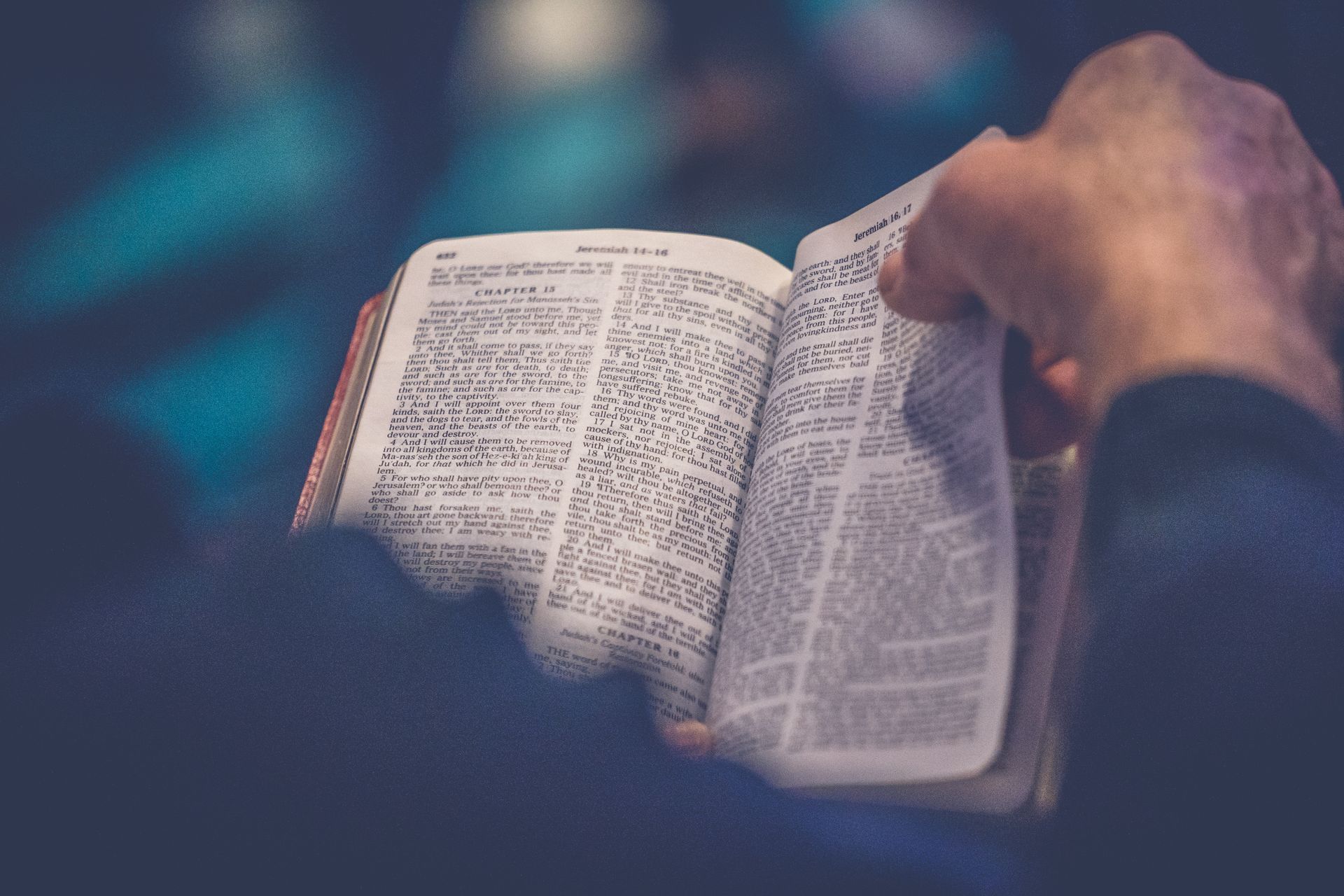
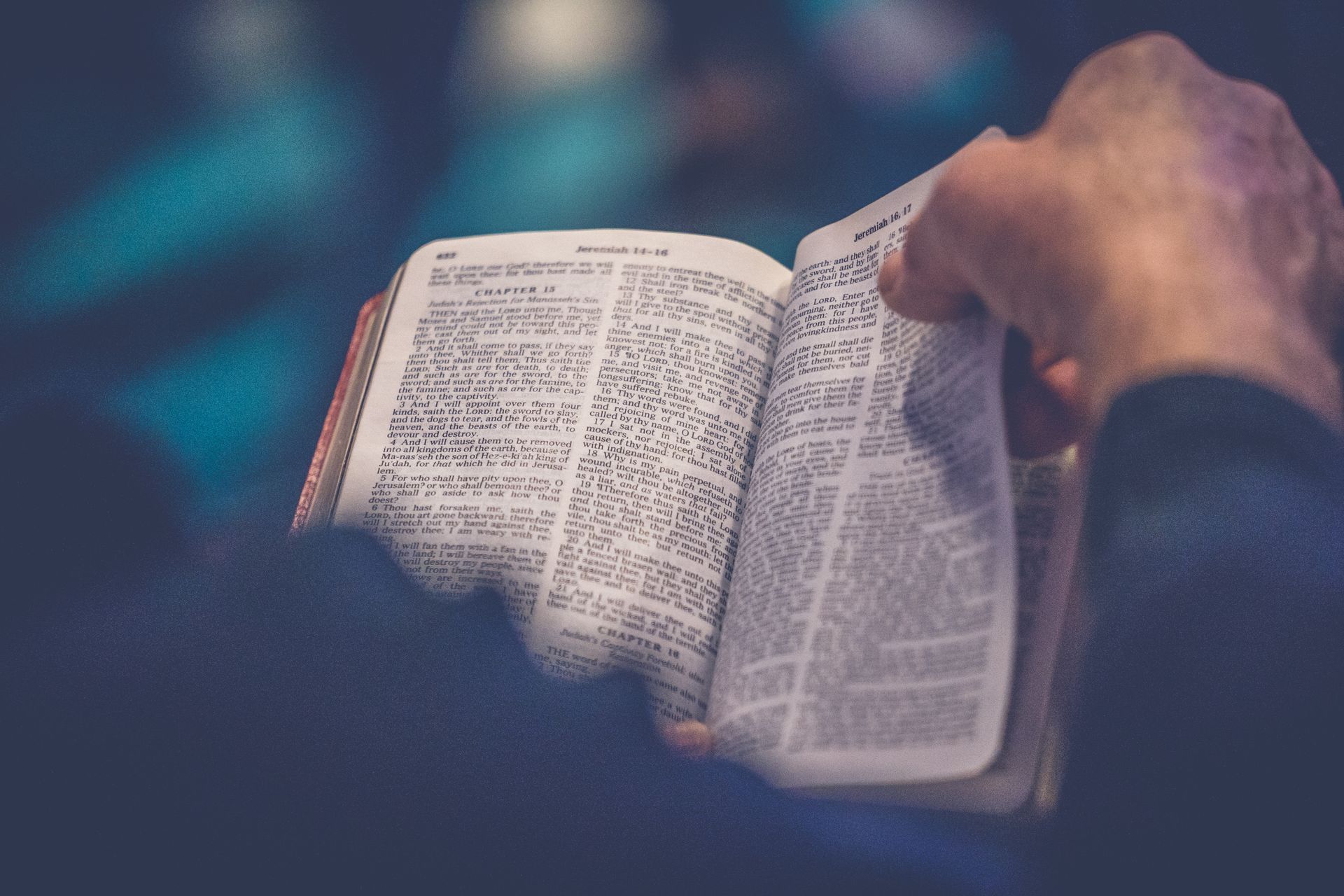
Acts 5:1-11


Now a man named Ananias, together with his wife Sapphira, also sold a piece of property. With his wife’s full knowledge he kept back part of the money for himself, but brought the rest and put it at the apostles’ feet.

Then Peter said, “Ananias, how is it that Satan has so filled your heart that you have lied to the Holy Spirit and have kept for yourself some of the money you received for the land? Didn’t it belong to you before it was sold? And after it was sold, wasn’t the money at your disposal? What made you think of doing such a thing? You have not lied just to human beings but to God.”


When Ananias heard this, he fell down and died. And great fear seized all who heard what had happened. Then some young men came forward, wrapped up his body, and carried him out and buried him.


About three hours later his wife came in, not knowing what had happened. 8 Peter asked her, “Tell me, is this the price you and Ananias got for the land?”


“Yes,” she said, “that is the price.”


Peter said to her, “How could you conspire to test the Spirit of the Lord? Listen! The feet of the men who buried your husband are at the door, and they will carry you out also.”


At that moment she fell down at his feet and died. Then the young men came in and, finding her dead, carried her out and buried her beside her husband. Great fear seized the whole church and all who heard about these events.


WORDS OF HOPE


This story about Ananias and Sapphira is a troubling one. What did they do that was so wrong as to cause their deaths? We’ll come back to that question.


Today is National Religious Freedom Day, a day whose observance was due to the work of Thomas Jefferson and James Madison on the Virginia Statute for Religious Freedom, which ultimately became the framework for the part of first amendment of the U.S. constitution, that says that Congress will make no law respecting an establishment of religion. This is supposed to keep there from being both political control of religion and religious control of government. Whether or not we are currently protected by the first amendment rests in how we understand the meaning of religion.


At the time the U.S. forefathers were writing the Constitution, religion was understood at its root to be a way of living that acknowledged a supreme being that was to be worshipped. This worship should happen in certain ways and people would be either rewarded or punished both on earth and in heaven based on how they lived their mortal lives. Much has been written about the nature of religion both before the time of Jefferson and Madison and after. It’s definition has morphed and thus so has the role of religion in culture and society.


Paul Tillich (1886-1965) was a Lutheran theologian and Christian existentialist. He wrote that religion is “the state of being grasped by an ultimate concern, a concern which qualifies all other concerns as preliminary and which itself contains the answer to the question of the meaning of life.” He also says, the basis for one’s religion is “whatever dominant concern serves to organize a person’s values, whether or not that concern involves belief in any unusual realities.” Thus, “religions” are constructs made by groups to fit their specific needs for living and understanding. And the freedom to do so is given in the first amendment of the Constitution. 


Tillich’s definition can be construed to give movements such as Marxism, white-supremacy, and celebrity fandom the designation of religion. With any kind of freedom, perhaps especially religious freedom, should also come responsibility. At the basis of Tillich’s thought is not the rights and freedoms of the individual, but the place and responsibilities of the individual in the community. One’s “religious beliefs” should support the good of community. This is where much of today’s “religious thought” falls short. Much is done in the name of religion that benefits the individual or a very small group of people. Is practicing such a way of life guaranteed to us as religious freedom?


The notion of focusing on the individual may be where Ananias and Sapphira went astray. They sold property and lied about the profits saying that they had given the entire amount of their proceeds to the apostles. They were thinking first of themselves and in doing so lied also about their commitment to the community. Death seems like a harsh punishment for what they did and I suspect the fear that was felt by the people observing these deaths was terrifying as how many of them, and us, put our own needs and desires before the needs of our community?


As we go about our days, we must live faithfully through our “religious values” knowing that what we believe is what shapes and guides us, but that these same values and beliefs may not be the same ones that guide our neighbors. We do have the right to believe as we feel called. We also have the responsibility to do so in a way that does not harm others with whom we share the path.


PRAYER


O God, I give thanks for the freedom to love, follow, and proclaim your goodness. Guide my ways such that I will do these things responsibly —showing love, mercy, and compassion to those whose way is different from mine. Help me to create hope, unity, light, and joy in the communities in which I live. Amen


DEVOTION AUTHOR


Kris Baker

Order of St. Francis and St. Clare


Need More Inspiration? Read our Daily Devotions

By Dan Peeler December 1, 2025
SCRIPTURE  Nehemiah 8. 2-4 So, Ezra the priest brought the Law before the assembly, both men and women and all who could understand…And he read from it facing the square … from early morning until midday, in the presence of the women and the men and all those who could understand. And the ears of all the people were attentive to the Book of the Law. And Ezra the scribe stood on a wooden platform that they had made for the purpose. And beside him stood all the Levite Priests. And Ezra opened the book in the sight of all the people, for he was above all the people, and as he opened it, all the people stood. WORDS OF HOPE All of us have heard a sermon, or perhaps many sermons, that have truly transformed our lives. The Bible, especially the Hebrew Scriptures, has its share of sermons, too. This one delivered by Ezra the scribe transformed the lives of an entire nation. And all he did was read aloud the Books of Moses. The people were profoundly changed by the Word of God. Nehemiah, the first Governor of Jerusalem during the Second Temple period, likely recounted this Hebrew Scripture event as a first-hand witness. As a background to the story, the people, after many years in Babylonian captivity, had just returned to their homeland. Many of them had not had the opportunity to hear a reading of their own Holy Scriptures for decades. The young among them had never heard it. Ezra’s public reading was more in the nature of the headline act at a rock concert. A special stage had been constructed for the event and his backup vocals were a team of venerable Levites, the famous tribe of priests who could answer scripture questions on the spot. It was a Revival even beyond the level of the legendary Billy Graham Crusades from the middle of the last century. Ezra’s formula was one of faith in the power of the word when read aloud, accurately interpreted, and applied, to inspire spiritual renewal. He was building a cohesive community with a shared commitment to follow God's laws of mutual love. The event also reminds us that this was a time in the history of the children of Israel when their patriarchal society gave way to welcoming all women as well as young people who were old enough to understand the message. All were included. Some were shocked, saddened by their years of neglecting their own scriptures, but Ezra reminded them that the ultimate purpose of God's Words is to inform us of the salvation they bring. Today, we have the privilege of hearing God’s message read every Sunday at church, and being a literate society, every day in our own homes if we choose. The next time you are asked to please rise for the reading of the Gospel, remember that Ezra’s congregation stood from early morning until noon to hear the reading of God’s Word. In your own life, whether in church or during those voluminous conversations on social media, do you stand for the Word of God? PRAYER God of Salvation, may your Words always be our own Words and may they always be words of Hope. Amen DEVOTION AUTHOR Dan Peeler Order of St. Francis and St. Clare
By Charlie C. Rose November 28, 2025
SCRIPTURE Job 38. 4-7 “Where were you when I laid the earth’s foundation? Tell me, if you understand. Who marked off its dimensions? Surely you know! Who stretched a measuring line across it? On what were its footings set, or who laid its cornerstone— while the morning stars sang together and all the angels shouted for joy? WORDS OF HOPE I love today’s excerpt from Job, with God as the divine architect laying out the Earth as a work of art. All of us can be artists, designers of our own lives. Some of us even do it for a living. For as long as I can remember, my artistic ideas usually didn’t come to me inspired by just one or two things. Life isn’t that way. I am blessed to come up with concepts I’ve been calling “idea clusters” for the last few years. Looking back, the first time this happened to me was probably while I was in the third grade. I had a formulaic idea of how to draw superheroes and fast cars. Superheroes dreams came out of watching multiple Saturday morning cartoons. Drawing race cars and hot rods was inspired by one called the Wacky Races. All were inspirations to create my own original concepts. The ideas flooded my brain, often well past my bedtime, and the sketches and lists began. I had such a strong inclination for getting the ideas down because I learned quickly if I let it go, the next morning I would have forgotten those inspirations. I’m still that way. Having ideas so strong that I need to keep detailed notes to make sure I could revisit after a deadline. In our very anthropomorphic concept of God, I’m in wonder at all the creation ideas that sprang forth, as if God wouldn’t be able to sleep until the ideas were manifested. But remember, God did rest on the Seventh Day! That’s more human and less Divine than I can get my head around. I don’t know how our world came to be. I’ve seen clusters of asteroids and meteors form planets and moons on the science channel. Theoretically, something had to manifest in the way of natural causes for these celestial bodies to form. Genesis defines it as Divine Creation. Science suggests that the raw material was stardust. Isn’t it humbling to imagine that we are literally made of Stardust? -Those clusters of particles that beg for a purpose from an almighty Creator. Raw materials in God’s idea clusters. Is Genesis somehow literal in saying humanity was made from dust? God’s stardust? It sounds prophetic, doesn’t it? Is that what happened? And here WE are…another miracle, God’s works of art in this thing called Creation. That’s probably enough to ponder for a day. What idea clusters do you have? Are you making a list? PRAYER Wonderous Creator, today, may I join the morning stars to sing together and shout for joy with the angels of the wonders of your Creation. Amen DEVOTION AUTHOR Charlie C. Rose Order of St. Francis and St. Clare
By Dr. Pat Saxon November 27, 2025
SCRIPTURE 1 Thessalonians: 5:18 “Give thanks in all things.” WORDS OF HOPE This Thanksgiving Day I am grateful for holy resistance. For all the ways we say NO to the forces of empire which seek to overwhelm us with one unjust edict after another, with one abuse of justice after another, with one attempt to silence free speech and peaceful protest after another. I give thanks for the myriad ways of resistance. For taking to the streets to cry NO KINGS, for cramming legislative halls with our bodies, for court filings, and for going to jail if that’s what it takes. But for the quieter ways of resistance too. For refusal to have our joy and our hope and our peace and our love stolen from us. Refusal to deny the holiness of our bodies, our identities, the spark of the divine in each of us. For God said, “You are good.” I give thanks for our grief which is a resistance to a culture so enslaved to production, to busyness that we are too often asked to suppress our sorrow, pull ourselves together and get back to work. For the grief which, even when complicated, honors the sacredness, depth, and everlasting connection of our relationships. For attending to our grief during the holidays, in resistance to succumbing to the expectations to overextend ourselves, to not setting healthy boundaries, to being silent about our loss, to not speaking their names. For resisting the Christian platitudes about grief we are offered—not out of intentional harm—but still harming in ignorance. I give thanks for those who help us resist—by making space for grief traditions at our tables, by inviting us to share a memory, by helping plant a tree in our loved one’s memory, or companioning a friend on her journey to scatter ashes if she wishes, by witnessing to our love and loss (and grief needs to be witnessed), By knowing now and forever that all grief is sacred. * This Thanksgiving, I am grateful for holy resistance. PRAYER Holy God, Cultivate in us all the ways of holy, healing, loving resistance. Amen. DEVOTION AUTHOR Dr. Pat Saxon *For local support: Faith and Grief at Faithandgrief.org The following links offer insights into grief processing: Dr. Alan Wofelt: The Art of Cherishing During the Holidays: https://www.youtube.com/watch?v=Obimo3V6uLo David Kessler and Michelle Martin in conversation on processing grief in a world of constant crisis: https://www.youtube.com/watch?v=I4cr1BU7r-0
By Jonathon McClellan November 26, 2025
SCRIPTURE Philippians 4:7 And the peace of God, which transcends all understanding, will guard your hearts and your minds in Christ Jesus. WORDS OF HOPE Tomorrow is Thanksgiving Day, a day for gratitude and peace, but the peace of God does not exist in a time or place, is not defined by how we feel at any given moment but is the companion that travels with us on a journey with two roads. One road is traveled internally, and the other, externally. If peace existed in a specific time and place, then we could not exist outside of it. If peace were defined by how we feel, then we would have no reassurance when our feelings changed. Jesus promised to give us his peace, and at the same time, aforehand told us that we would face trials and tribulations. To understand that we can have peace with tribulation, we must first understand how the peace of God differs from human peace. God’s gift of peace is the reassurance of God’s presence in our lives. In essence, it is because of that presence that we do indeed have peace. The companionship of the Christ, Spirit, and God’s loving hands that covers us bear fruit in us unto peace. This great love works in our lives fulfilling God’s purpose to prosper us. It is not limited nor temporary. Even in the depths of despair, God our peace, is with us. Our helper leads us to victory over the battles we fight every day in our hearts. When winds of change blow like a hurricane all around us, our God is a mighty defense. On the inside, we must choose every day whether to love ourselves, forgive our enemies, and often, trust in what we cannot see. God is speaking to our hearts every day and we must choose to listen or not to listen. On the outside, we face a world that with each revolution brings new trouble. God does not always prevent trouble from happening to us but strengthens us when it does. Trails may come but God has overcome. It is because of our relationship with our Creator that we can have the peace of God. Truly, our peace never leaves, for God is everywhere. PRAYER God our peace, Bless You, for being with us when we could not see You and for never letting us travel alone. Praise You, for You command the storms in the world and in our hearts to be still. By Your companionship, we are mighty conquerors. In Your loving arms, we are at peace. Amen. DEVOTION AUTHOR Jonathon McClellan Order of St. Francis and St. Clare
By Kris Baker November 25, 2025
SCRIPTURE 2 Thessalonians 3:13 And as for you, brothers and sisters, never tire of doing what is good. WORDS OF HOPE I often dismiss my college level classes by telling my students to “go out and do the next right thing.” It used to be that this statement was more about making good choices than actually knowing what was right. The other day, a student, who had heard me say this to the class many times, was the last to leave. They waited around to ask me, “How do I really know what is right?” The current climate of life in our country, amplified by the influence of social media, most certainly has blurred our perception of right and wrong and good and evil. My friends have an older neighbor who fell ill and was hospitalized for several weeks. The neighbor lives alone with two dogs. My friends and other neighbors stepped up to make sure that the dogs were cared for by someone actually taking them into their home. Others maintained the yard and did a much-needed cleaning of the home’s interior so that it was welcoming upon their return. Most people would consider these as acts of care and kindness. Unfortunately, that was not the case in this situation. The recipient of these intended acts of goodness was angry at everything that had been done. “The yard didn’t need to be whacked down to dead twigs. The dogs didn’t need to be groomed. I was going to clean the house when I got home.” My student’s question about how do we really know what is right suddenly became more momentous. As a follower of Christ, I have always believed that Jesus tells us, in Matthew 7:12, exactly what doing good looks like— “So in everything, do to others what you would have them do to you, for this sums up the Law and the Prophets.”. Seems simple, but based on my friends’ experience, it’s not. What do we do when what we thought was good and right is not perceived as such? Or, the contrary, when what we see as not right is perceived as good? Paul’s letter to the Romans has an answer for us. “Do not conform to the pattern of this world, but be transformed by the renewing of your mind. Then you will be able to test and approve what God’s will is—his good, pleasing and perfect will.” (Romans 12:2) As you go about your days, pray for guidance, be an example of peace and love to the world, and go forth and do the next right thing. PRAYER Loving God, guide my words and actions as I greet this new day. Grant me courage and strength to move through my day showing kindness, patience, and love to others and to myself. Teach me to always be a reflection of your goodness. Amen DEVOTION AUTHOR Kris Baker Order of St. Francis and St. Clare
By Donald (Luke) Day November 24, 2025
SCRIPTURE Joshua 1:9 Be strong and courageous; do not be frightened or dismayed, for the Lord your God is with you wherever you go. WORDS OF HOPE Within the Genesis story of Earth' s creation and the unfolding of the human experience, God saw great beauty and expanding potential for our loving relationship with the Holy One. The creative act endowed humanity with freedom of choice. The descendants of Adam and Eve often chose a lifestyle pattern which was compatible with divine hopes while many more ignored the opportunity to walk in the ways of God. Then, from the descendants of the righteous man, Abraham, God chose to demonstrate the Divine's nature and purpose toward humanity. However, even those Israelites often failed to live according to God's desires. It was an era when so many were frightened and dismayed, but the creation was not to be abandoned by God. Creation would be redeemed. And from the family of Jesse, King David's father, would arise One who would restore humankind's relationship with God. Throughout the centuries, we have been given hope and courage by so many hymns that remind us of that truth. "Lo, how a Rose e'er blooming from tenderest stem hath sprung, of Jesse's lineage coming as saints of old have sung. It came a flower bright, amid the cold of winter, when half spent was the night… True human but very God, from sin and death God saves.” -from a 16th-century German hymn. Do you remember this hymn by Bob McGee? "Emmanuel, Emmanuel, his name is called Emmanuel, which means God with us and revealed in us. God continues to offer us this incredible, loving gift of Emmanuel to draw us into close relationship with the Holy One. God in us, God with us and God to act through us. As Thanksgiving approaches, what a joy it is to be grateful for this gift of divine wisdom that empowers us to bless the world. What a fantastic gift which is freely offered to each of us by the loving Creator. A THANKSGIVING SEASON PRAYER Almighty God, we give you thanks that you will sustain and guide us through uncertain periods of life. We can place complete trust in your constant presence and love in our lives. Strengthen us to listen and respond to your voice. And may our confidence in your guidance allow us to comfort and help those around us who experience fear and need. Amen. DEVOTION AUTHOR  Donald (Luke) Day Order of St Francis and St. Clare
More Posts