Monday - September 28, 2026

Reed Kirkman

SCRIPTURE


Philippians 1:3–14

I thank my God every time I remember you.”


WORDS OF HOPE


Family Day


According to Lilo & Stitch, “ohana means family.” Nobody gets left behind or forgotten. It is a simple idea, perhaps almost too simple for adults who have spent centuries finding ways to make family complicated. But children sometimes understand what grown-ups forget: family is about belonging. It is where we learn our names, our stories, our jokes, our traditions, and those wonderfully strange rituals that make a household uniquely itself. It is also where somebody remembers the embarrassing story you were absolutely certain had been permanently deleted from history. On Family Day, then, I find myself wondering: What if family was never meant to fit inside one picture? What if the mystery of family is that it keeps becoming larger than the definitions we give it?


We tend to carry around an image of what a family is supposed to look like: a mother, a father, 2.3 children, a pet, a minivan, a mortgage, and perhaps a white picket fence for good measure. Somewhere along the way, we took one particular arrangement and promoted it from one way of being a family to the definition of family, as though God had handed us a blueprint from heaven and said, “Congratulations. This is the only acceptable floor plan.” But real families have never been that tidy, and neither has Scripture. The Bible is filled with widows and orphans, unmarried people, blended and extended households, friends who become family, and communities that gather around people when traditional structures fail. Scripture gives us families who are complicated, grieving, surprising, imperfect, and occasionally downright chaotic. Maybe the Bible's refusal to give us one perfect family portrait is not a problem to solve. Maybe it is an invitation to wonder at all the ways love creates belonging.


I grew up in what many people would describe as a traditional nuclear family. I was raised by a mom and dad, and I have a younger sister who is about three and a half years younger than me. Today, another branch has been added to our family tree through my nephew, Maverick. And I get to be the best uncle ever. I am grateful for the family I was given—the people who remember my childhood, my awkward phases, my victories, my failures, and the stories I would prefer never to be repeated at Thanksgiving. Families have a remarkable memory, after all. It remembers the adorable things we did, the ridiculous things we did,


and, inconveniently, the things we were really hoping everyone else had forgotten. But being grateful for my own family does not mean believing everyone else's family must look like mine. The older I get, the more I wonder whether the beauty of family is found not in uniformity but in its astonishing variety.


Spend some time at Cathedral of Hope, and that variety becomes visible almost immediately. I see two men raising children. I see two women raising children. I see LGBTQIA+ families, grandparents raising grandchildren, blended families, adoptive families, single-parent families, multigenerational families, and families whose stories refuse to fit neatly inside a census form. And beneath all those different arrangements is something wonderfully ordinary: people loving one another, laughing together, crying together, caring for one another, showing up when somebody needs help, and occasionally wondering who ate the last cookie.


Two dads raising a child is not a sin. Two moms raising a child is not a sin. An LGBTQIA+ family is not a defective version of a “real” family. Families that take other forms deserve the same dignity and care. Even polyamorous families, remind us that human love has never been quite as tidy as the boxes we try to build around it. Perhaps the better question is not whether a family looks familiar to us, but whether love is flourishing there—whether people care for one another, protect one another, take responsibility for one another, and show up when it matters.


For some families, that sense of connection reaches backward across generations. Family can be carried through names, stories, traditions, and memories that existed long before we were born. Scottish clans offer one striking example. I have a connection to Clan Stewart, and that connection reminds me that family can sometimes reach farther into the past than our own memories can. The Stewarts were not simply a Scottish clan; the Stewart dynasty eventually became one of the great royal dynasties of the British Isles. That history eventually leads us to the modern British royal family and to King Charles III, who inherited the Crown after the death of his mother, Queen Elizabeth II. Whatever we may think about monarchy, there is something fascinating about the way family can carry history forward—through names, traditions, responsibilities, stories, and sometimes even titles.


And then there are chosen families—the people who may not share our DNA or our last name but somehow become part of the story of who we are. As an LGBTQIA+ ally, I have a chosen family at Cathedral of Hope. At the 10 a.m. service, I sit in the front row behind the acolytes and lay ministers of worship, among what I sometimes affectionately call the Holy Troublemakers. We ask questions. We challenge assumptions. We believe LGBTQIA+ people belong fully in the church. Not halfway. Not with an asterisk. Not after passing some

theological entrance exam. Fully. We believe faith should lead us toward compassion, welcome, justice, and love rather than fear and exclusion. But these are not simply theological convictions for me. These are my friends. We do things together. We laugh together. We cry together. We celebrate together. We sit with one another when life gets difficult. We show up. We make memories. We probably occasionally drive one another a little crazy, because apparently that is also one of the privileges of family.


The household of God is larger than our family trees. The table of God is wider than our dining rooms. God's love keeps surprising us with people we did not expect to call family. So, celebrate the family you were born into. Give thanks for the family you have chosen. Remember the people who have laughed with you, cried with you, prayed with you, celebrated with you, and loved you into becoming who you are. Then look around. Who is standing at the edge of the room, wondering whether there is a place for them? There is. Pull up a chair. Because ohana means family. And perhaps the deepest miracle of all is that God's family keeps reminding us that nobody is meant to be left behind or forgotten.


PRAYER


Loving God, thank you for the many forms family can take—for the families we are born into, the families we create, and the chosen families who walk beside us. Thank you for every parent, child, sibling, grandparent, friend, and community that reminds us we belong.


Help us to make room at our tables and in our hearts for all people. May no one be forgotten, rejected, or left behind. Teach us to love as you love: generously, compassionately, and without conditions.

May we always remember that your family is bigger than our definitions and your table has room for everyone. Amen


DEVOTION AUTHOR

Reed Kirkman


Need Some Inspiration? Read our Daily Devotions
By Dr. Pat Saxon • November 12, 2026
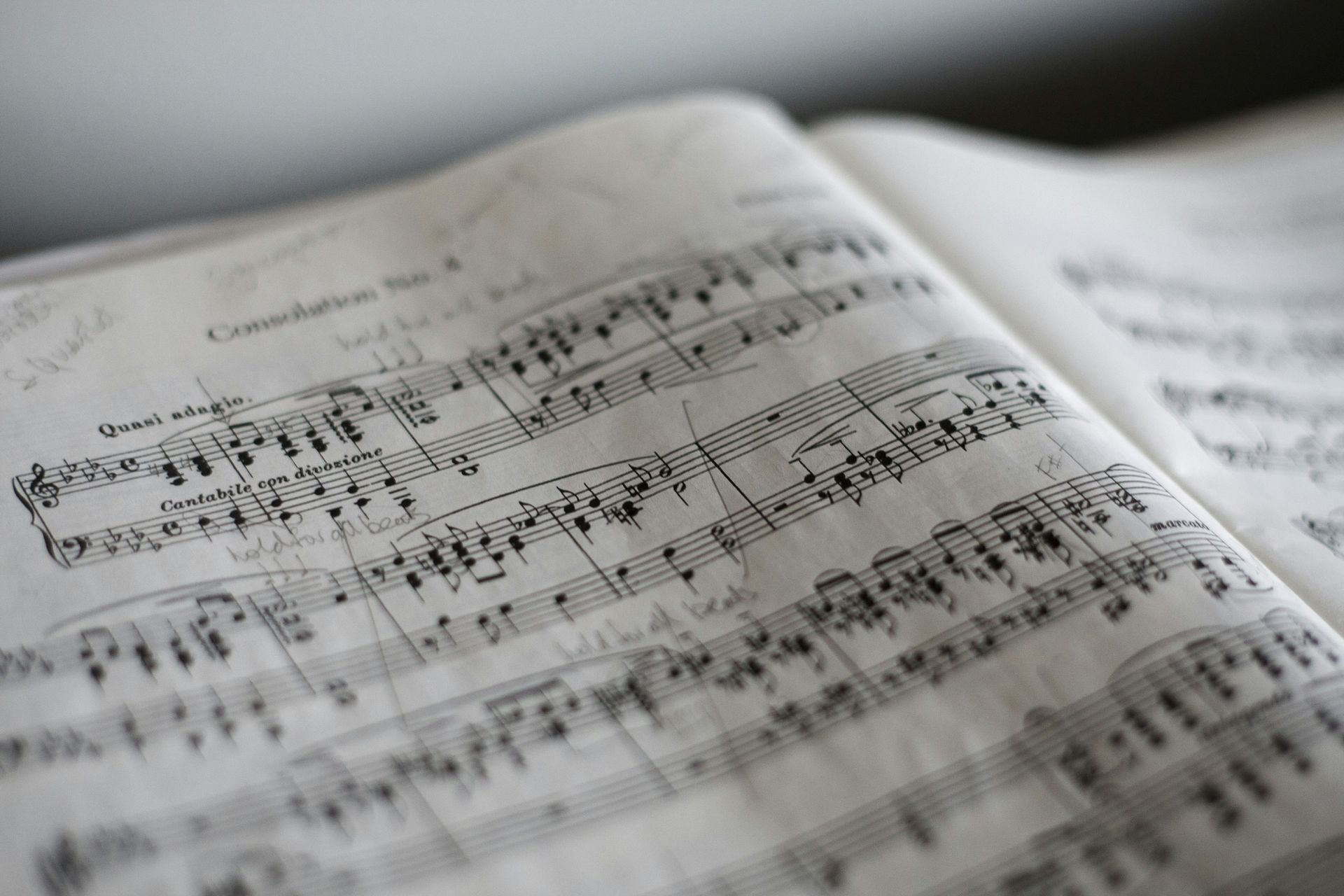
SCRIPTURE  Ephesians 5:19 Speak to one another with psalms, hymns, and songs from the Spirit. Sing and make music from your heart to the Lord. WORDS OF HOPE I’ve loved to sing since I was a young child. It was musical nursery rimes at first, then “Jesus Loves Me” and “Jesus loves the little children—all the children of the world. Red and yellow, black and white, they are precious in [God’s] sight.” Thinking back, I love those early messages of inclusion tucked deep inside my brain and heart. I sang in the house, on the swings, and walking down the sidewalk in the sun, blond curls swaying in the breeze. Church Youth Choir, High School Concert Choir, College Glee Club followed. And then a hiatus in community singing—but never the quieting of song. When I moved back to Dallas after graduate school to take my first full-time job and met the love of my life, we were pretty closeted since we taught in a girls’ school where periodic rumors of gayness would stalk single female faculty. But after I had become well-established, I summoned the courage to audition for the Women’s Chorus of Dallas at a time when Tim Selig was still conductor. Days and months of rehearsals and singing in the car with a practice tape led to glorious performances--stepping onto the Meyerson stage to join the Turtle Creek Chorale for amazing concerts—singing “The Awakening,” “We Shall Overcome,” and eventually “Sing for the Cure” with Maya Angelou as narrator. When she stepped to the podium at dress rehearsal and sang, “Sometimes I feel like a motherless child,” there was not a dry eye in the house. With all this history, it’s not surprising that when I began to facilitate grief groups again, I gravitated to learning the power of breath and breathing as well as teaching how healing it is to sing during times of loss. Music reduces stress and anxiety, helps express emotions, reduces cortisol levels, heart rate and blood pressure, promotes relaxation and emotional regulation. As well, it is a connecting bridge to our loved ones who have died. I remember too, with poignancy, how our dearly departed Randy Johnson’s friends played a mix of his favorite music, including rock, when he was near death. And friends have reported singing their mother’s favorite hymns as she was going home. Blessed assurance. Recently, two of our choir members and I were talking about the studies which indicate music’s restorative impact for people living with dementia. A Mayo clinic post speaks of “findings about how music affects both behavior and cognition in people with AD (Alzheimers). For example, one study found that listening to music seemed to stimulate verbalization, improve recall of some memories, and increase relaxation. Another group found that music may improve sleep by increasing levels of melatonin in the body.” Moreover, effects are even stronger when the music is personalized to the life, eras, experiences of the individual. (connect. mayoclinic.org) One of the women shared that singing has also been very instrumental in Parkinsons care and spoke of choral groups of Parkinson’s patients. In furthering my knowledge, I came across the following video from the Parkinson’s foundation. It is longish, but includes research on the value of singing as well as segments inviting us to participate in warm up exercises and group song practice to “Here Comes the Sun,” to which I sang along. https://www.youtube.com/watch?v=7y3P37byPa8&t=1718s Whether for personal delight or healing and restorative power, music is one of God’s greatest gifts. And for that we give thanks! PRAYER Blessed Creator and Giver of Song, Let music never die in us. Forever let our spirits sing. Wherever emptiness is found let there be song and glorious sound. Let music live! Let music live! Amen. ( from “The Awakening” by Joseph Martin) DEVOTION AUTHOR Dr. Pat Saxon
By David Simms • November 11, 2026
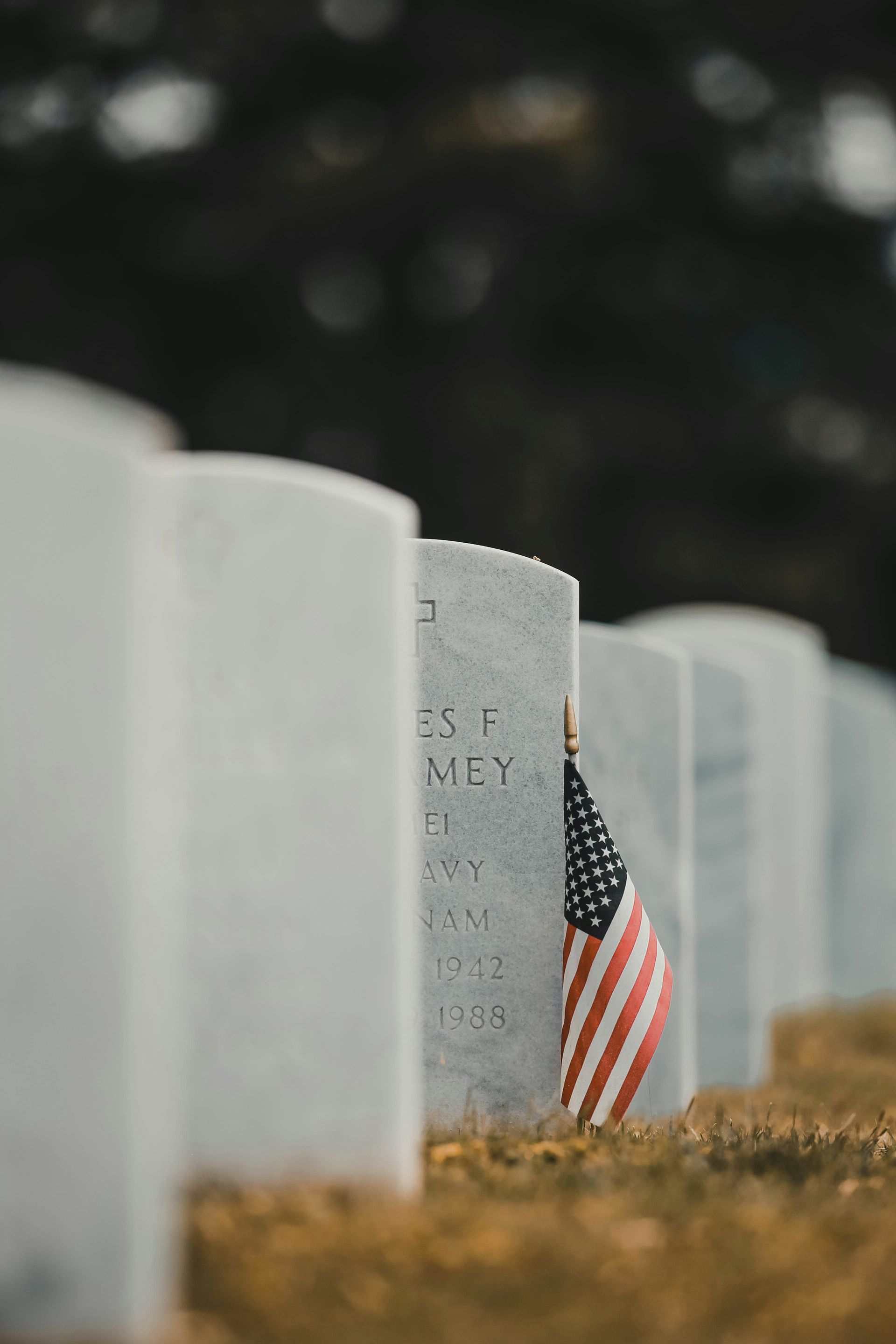
SCRIPTURE Isaiah 2:4 (NIV)  God will judge between the nations and will settle disputes for many peoples. They will beat their swords into plowshares and their spears into pruning hooks. Nation will not take up sword against nation, nor will they train for war anymore. WORDS OF HOPE VETERANS DAY – NOVEMBER 11 January 23, 1973, was a day of profound relief for me and the men of Kerr Hall at the University of North Texas and for countless others around the world when President Nixon announced that an agreement had been reached to end American involvement in the Vietnam War. Four days later, on January 27, the Paris Peace Accords were signed, and Defense Secretary Melvin R. Laird declared that the Armed Forces would henceforth rely solely on volunteers. With that announcement, twenty-five years of the draft came to an end. I am reminded today of how narrowly I escaped the fate of so many young men drafted into a war few fully understood. I am also reminded of my father, my uncles, and the many others who enlisted or were conscripted to serve in World War II. Most of us have relatives or friends who wore uniforms. Many of you are veterans yourselves. Remembrance alone is not enough. Today we pause to honor the men and women who have served this nation in uniform. We give thanks for their courage, their sacrifice, and their willingness to stand in harm’s way so that others might live in freedom. Behind every uniform is a human story of duty and family, of friendships forged under pressure, and of wounds, visible and invisible, that often remain long after the fighting has ceased. True honor means more than memory. It means caring for those who served, listening to their stories, and acknowledging the real price paid for the liberties we enjoy. Through the prophet Isaiah, God gives us a vision of a world in which swords are beaten into plowshares and the instruments of destruction become tools that cultivate life. This hope does not diminish the sacrifices of those who have served; it honors the very peace their service sought to protect. One of the most faithful ways we can honor our veterans is to labor, in our own time, toward the day when future generations will no longer need to learn the ways of war. PRAYER Lord of all nations, we thank You for those who have stood in uniforms for the sake of others. Heal the wounds that linger, strengthen the peacemakers among us, and hasten the day when swords are laid down and Your peace reigns over all. Amen. DEVOTION AUTHOR David Sims, Deacon
By Reed Kirkman • November 10, 2026
SCRIPTURE Psalms 78 (The Inclusive Bible) “Listen, my people, to this teaching; open your hearts to wisdom. I will share stories and sacred mysteries, wisdom passed down through generations. We will share these stories with those who follow, proclaiming the wonders of the Holy One, the power of Divine Love, and the sacred wisdom of our ancestors.” WORDS OF HOPE Sesame Street Day Today is Sesame Street Day, and I have a confession to make: I was raised on the street—Sesame Street, that is. As a toddler, I didn't know I was receiving an education. I thought I was watching television. But there was Sesame Street, teaching me my ABCs and 123s, colors and shapes, counting and patterns, words and eventually how to tell time. A triangle had three sides. Numbers could be fun. Learning could involve singing, dancing, monsters, cookies, and the occasional very large yellow bird. And somewhere between “one, two, three” and “A, B, C,” I was learning something else: how to be a human being. Sesame Street gave me a vocabulary for feelings. Happy. Sad. Angry. Scared. Confused. It taught me that feelings weren't something to be ashamed of or shoved into a closet. They could be named, shared, listened to, and worked through. It taught me friendship, sharing, taking turns, helping others, making mistakes, apologizing, and trying again. PBS gave me other teachers, too. I loved Mister Rogers' Neighborhood. Fred Rogers reminded children that their feelings mattered, that they mattered, and that someone was willing to listen. I still try to strive to be a little more like Mister Rogers—to slow down, listen carefully, notice who is being left out, and make room. Then there was Arthur, teaching me about friendship, family, disagreements, mistakes, and growing up. And Bob Ross, painting happy little trees and quietly teaching me that a mistake doesn't have to destroy the canvas. Sometimes you can turn it into something beautiful. Looking back, these weren't merely children's programs. They were some of my earliest teachers in curiosity, empathy, creativity, patience, imagination, and wonder. Apparently, some of my earliest theology came from PBS. Now I get to watch Sesame Street with my nephew, Maverick. Seeing him discover the same neighborhood that captivated me decades ago feels almost like watching the toddler I once was sitting beside the uncle I've become. And then there is that question: “Can you tell me how to get to Sesame Street?” When I was little, it was simply the beginning of a television show. In 2026, it sounds almost like a prayer. How do we get to a world where LGBTQIA+ children know they are loved—not merely tolerated? Where disabled people aren't treated as afterthoughts? Where children of different races, cultures, religions, languages, and families can look around and say, “I see myself here”? Where immigrants and refugees are recognized as human beings carrying names, stories, families, dreams, and sacred worth? Maybe Sesame Street has been showing us the way all along. Look at that neighborhood. Big Bird is big. The Count loves counting. Snuffy is unmistakably Snuffy. Cookie Monster is, well, Cookie Monster. And somehow, they all belong. The neighborhood has welcomed guests like Michelle Obama, Elton John, Stephen Colbert, and Jimmy Kimmel. And honestly, I would like to be there, too. I want to walk down the street, sit on the stoop with Big Bird, share a snack with Cookie Monster, and maybe bring coffee. Although Cookie Monster may have other priorities. Nobody has to become less of themselves to belong. Maybe that's why this feels theological to me. Jesus spent so much time widening the definition of neighbor. The Good Samaritan wasn't exactly a lesson in keeping the neighborhood comfortable. Your neighbor isn't necessarily someone who looks like you, believes like you, worships like you, or lives like you. Sometimes your neighbor is the person you were taught to overlook. The street gets wider. The circle gets wider. The table gets wider. Perhaps that's what I want to remember from the child I once was: stay curious. Childlike, not childish. Ask questions. Say, “I don't know.” Listen before judging. Be amazed. Leave room for the possibility that the world is bigger than the little box you've been handed. Maybe getting to Sesame Street isn't about finding a place on a map. Maybe it's about becoming the kind of people who build that street wherever we are. A place where everyone can say: “I belong here.” PRAYER Loving God, Mother of mercy and Source of wonder, teach us to see the world with children's curiosity and the courage to pursue justice. Help us build neighborhoods where every child is cherished, every difference is treated with dignity, and nobody must earn love. Give us Mister Rogers' gentleness, Bob Ross's imagination, and the courage to stand beside those pushed aside. May our homes, churches, classrooms, and communities become places of welcome, laughter, learning, and radical love. When we forget the way, remind us that building a wider neighborhood begins with how we treat one another. Amen. DEVOTION AUTHOR Reed Kirkman
By Jan Nunn • November 9, 2026
SCRIPTURE  Ephesians 2:8–9 For it is by grace you have been saved, through faith—and this not from yourselves, it is the gift of God—not by works, so that no one can boast. WORDS OF HOPE I love sweet surprises! We sure got one this year during our anniversary weekend. We went to Tyler, Texas for a little getaway. We actually celebrate two anniversaries. Our "real" anniversary is October 5, 1991. It is when we had our Holy Union in our townhouse in Arlington, Texas with only five people. We did not tell a lot of people. Gay "weddings" or Holy Unions were not well accepted in 1991. We did not dare ask our pastor at our Methodist church where we were members to perform our Holy Union! A friend knew a guy from the "gay church in Dallas!" We NEVER DREAMED in 1991 that OUR marriage could ever be legal! But for us it was real. Along came 2015 and "gay" marriage became legal! So, we had the wedding of our dreams with almost 400 people at "that gay church" in Dallas where we were members! October 5th was a Monday, so we had this legal wedding on October 3rd, a Saturday. So now we have two anniversaries! That does not have a lot to do with our surprise in Tyler. It just gives you some background. AND I seldom miss a chance to tell our wonderful story! On the day between our anniversaries, we went to the Tyler Zoo and then to Texas Roadhouse for dinner. We had a very nice waitress. She was friendly and we could not resist telling her we were in Tyler to celebrate our anniversaries even though East Texas is not always the most accepting place. We also asked for special lesbian privilege. The WNBA playoffs were going on, and we wanted one of the many TVs to be turned to show the women's game. The head bartender made that happen and then stopped at our table to visit and discuss WNBA. We told him we were season ticket holders for the Dallas Wings. I am not sure we told him we were in town celebrating our anniversaries. He stopped by to visit a couple of times. When it was time to leave, we told our kind server we were ready for our bill. She informed us that our bill had already been paid! She said by another guest, but I wonder if one or both of our attentive staff were responsible! I was totally blown away! Talk about unmerited grace! No one had ever done that for us before who did not know us. It just felt like the sweetest gift! We gave our server a very nice tip and told her how grateful we were! And gave her a big hug when we left! That is how God's love is! Amazing, unexplainable, wonderful love that we do not deserve. PRAYER Amazing God, thank you for always giving me your amazing grace and love and for sending unexpected people and moments to remind me that even when our world seem so divided, there are still those all around in the most unexpected places who show us how good life is! DEVOTION AUTHOR Jan Nunn, Cathedral of Hope Volunteer
By Tomas Riggs • November 6, 2026
SCRIPTURE  John 8:6b-8 Jesus bent down and started to write on the ground with his finger. 7 When they kept on questioning him, he straightened up and said to them, “Let any one of you who is without sin be the first to throw a stone at her.” Again he stooped down and wrote on the ground. WORDS OF HOPE Having raised a daughter and a non-binary child, there were several times when my parental instincts and my feminism and allyship clashed. This happened frequently during their middle school and high school years. Often, I found myself unlearning the man I was taught to be. As a feminist, I wanted to raise children who were outspoken and independent, who took ownership of their choices, and who weren't afraid to challenge a misogynistic culture. However, I learned, sometimes rather harshly, that raising independent children means accepting that they won't always agree with me or follow my perfectly good advice. Never was this struggle more real than when it came to the clothing they chose to wear. When they walked into the room wearing something revealing, provocative, gender-bending, or simply different, decades of cultural conditioning came rushing back. I believed they deserved autonomy over their bodies and the freedom to express themselves. Yet, there I was, struggling to practice what I believed. In John 8, religious leaders set a theological trap for Jesus. Men stood ready to stone a woman to death because they accused her of adultery. And there was Jesus, drawing in the dirt (what WAS he drawing, anyway?). But notice what Jesus didn't do. He didn't say a word to the woman about what she was wearing, how she got there, or what she might have done to deserve this. Instead, Jesus turned the attention back to the men holding the stones. He made them take a good, hard look at themselves. Too often, our instinct is to ask someone to change their behavior rather than confront the culture that makes us uncomfortable. Sadly, many Christians have become quite skilled at using scripture as a weapon to police everyone else's behavior while conveniently overlooking their own. But Jesus was radically serious about self-examination. Remember the plank in your own eye before worrying about the speck in someone else's? He was repeatedly gentle with those who recognized their shortcomings and remarkably harsh toward those who considered themselves righteous enough to judge others. All people deserve safety and respect, regardless of what they wear. No one should have to make themselves smaller, less visible, or less expressive to accommodate someone else's discomfort. I had to learn that my discomfort wasn't necessarily evidence that my children were doing something wrong. Sometimes it was evidence that I still had some unlearning to do. Perhaps that's the challenge of this story. It's easy to identify with the woman surrounded by judgmental people. It's much harder to recognize ourselves among the men holding stones. Jesus didn't ask the woman to make herself more acceptable to the men holding the stones. He asked the men to examine themselves. Maybe that's where our own unlearning begins. PRAYER Mother, Father, non-binary God, help us recognize the judgments and assumptions we carry, especially those we have mis-taken for love, protection, or righteousness. Give us the humility to examine our own hearts before questioning the choices of others. Teach us to put down our stones and honor the sacred worth of every person. Amen. DEVOTION AUTHOR Thomas Riggs
By Weber Baker • November 5, 2026
SCRIPTURE  Luke 22:47-53 While he was still speaking, suddenly a crowd came, and the one called Judas, one of the twelve, was leading them. He approached Jesus to kiss him, but Jesus said to him, “Judas, is it with a kiss that you are betraying the Son of Man?” When those who were around him saw what was coming, they asked, “Lord, should we strike with the sword?” Then one of them struck the slave of the high priest and cut off his right ear. But Jesus said, “No more of this!” And he touched his ear and healed him. Then Jesus said to the chief priests, the officers of the temple police, and the elders who had come for him, “Have you come out with swords and clubs as though I were a rebel? When I was with you day after day in the temple, you did not lay hands on me. But this is your hour and the power of darkness!” WORDS OF HOPE To begin, I need to point out that the above passage of scripture is one of three versions of this particular story. In the gospel of John, it specifically named Peter as the one who draws his sword; and Malchus as the one who is struck. In Matthew’s version is the famous “those who live by the sword shall die by the sword.” Matthew also tells us that that disciple abandoned Jesus when he was arrested. I chose this particular one because it is the only one in which Jesus heals the man who is struck. Today is the International Day Against Violence and Bullying. And when I read about this day this passage, or rather all of these passages, dealing with Jesus’s arrest, came to mind. Clearly violence is here in the passage. A sword is drawn, a person is struck; but Jesus admonishes his followers that violence is not the answer. And he then heals the wound. Bullying is here too in all three versions. It clearly states that a crowd approaches Jesus, not just the high priest, his servants, or temple guards alone. In my mind, this is a form of bullying. Those who have come to arrest Jesus want to make sure that his followers can be contained. They want to make sure that Jesus is intimidated. That of course does not work on Jesus because Jesus knows what is to come. But as Matthew tells us; “you worked on the disciples.” So, what can we take from this and use in our own lives? Though it is hard to stand up to a bully or bullies; if we know where we come from, and we know where we’re going, and we are certain of our place in God; we can be more like Jesus. We can be more like the disciples were after the Pentecost. We can stand against violence and bullying. And just as Jesus does with Malchus we can bring healing to those we see who are bullied. PRAYER Great God, you have commanded that we love one another. Bring us to that place of love in whatever circumstances we find ourselves so that we may project that love to all around us so that those who would harm us or try to intimidate us are rendered powerless. And bring us in that love to a place where we neither commit violence nor try to intimidate others so that we may truly and follow the Way of Jesus. DEVOTION AUTHOR Weber Baker. Order of Saint Francis and Saint Clair
More Posts